Floral Giraffe: A Craft Fair-Ready Embroidery Design
First Impression: Whimsy Meets Wild — With Instant Charm
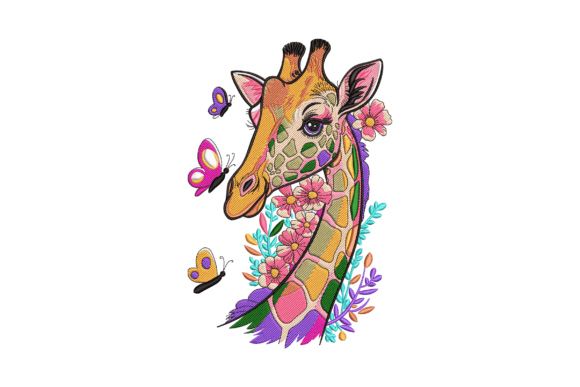
As an embroidery designer who’s prepped over 200 craft fair booths, I’ll say it straight: Floral Giraffe lands with a smile. It’s not fierce or hyper-realistic — it’s delightfully whimsical, soft-edged, and full of personality. Think modern cottagecore meets playful safari: gentle curves, botanical accents woven into the giraffe’s silhouette, and a lightness that reads as handmade, not mass-produced. It leans into charm over drama — making it ideal for buyers seeking warmth, approachability, and quiet storytelling in their handmade product.
Where Floral Giraffe Shines on Craft Fair Merchandise
This machine embroidery design thrives where personality meets practicality. Here’s how it performs across top-selling craft fair items:
- Tote bag design: Perfect as a centered chest placement or bold side panel. The balanced proportions hold up beautifully at 4–5 inches wide — large enough to read from three feet away, small enough to avoid overwhelming natural canvas texture.
- Apron embroidery: Ideal above the pocket or along the waistband. Its vertical flow complements apron shape, and the floral elements soften the formality of kitchen wear without sacrificing clarity.
- Tea towel embroidery: Works best as a single focal motif near the hem or corner. Avoid dense stitch clusters here — the fabric texture of linen-cotton blends can mute fine details if stitch density is too high.
- Embroidered patch: Highly adaptable. Clean outlines and moderate detail mean it transfers well to iron-on or sew-on patches — a fast-turn, high-margin craft fair staple.
- Caps and pouches: Use scaled-down versions (3 inches max) only on structured fabrics. On curved cap surfaces, test stitch pull and edge definition — tiny floral elements may blur without proper stabilizer support.
- Pillow covers and market bags: Excellent as a subtle repeat or singular statement. The design’s organic rhythm reads well in both neutral and saturated fabric backgrounds.
What Makes Floral Giraffe Sell — and What Requires Caution
Customers notice Floral Giraffe because it balances familiarity (giraffe + florals) with unexpected harmony. It feels intentional, not trendy — meaning it stays fresh beyond seasonal shifts. That’s gold for Etsy sellers and small shop product lines aiming for longevity.
But real-world production demands attention:
- Dense stitch areas: If the floral elements include tight fill stitches or layered petals, they’ll struggle on textured towels or thick twill caps. Always test on your exact fabric.
- Small details: Delicate stems or thin vine lines may vanish below 3 inches — especially on dark fabric or low-contrast thread colors. Confirm legibility at your smallest intended size before cutting batches.
- Fabric texture matters: Rough weaves and terry cloth absorb definition. For tea towel embroidery or market bags, opt for lighter-weight cotton or linen blends to preserve line integrity.
- Hoop size & stability: Check your embroidery file’s recommended hoop size — a design stretching across 6 inches needs a 6x10 or larger hoop. Smaller hoops force awkward re-hooping, slowing batch production.
Visual Impact, Booth Presence, and Buyer Connection
In a crowded craft fair aisle, Floral Giraffe stands out by inviting touch and pause — not shouting, but smiling. Its soft contrast and rhythmic shapes draw the eye without competing with neighboring booths. When stitched on a cream linen tote or sage apron, it elevates perceived value: this isn’t generic clip art — it’s considered, crafted, and cohesive.
For boutique makers building brand consistency, Floral Giraffe fits effortlessly into nature-inspired, gentle-aesthetic, or modern-rustic collections. Paired with complementary embroidery files — think leafy vines or minimalist birds — it strengthens visual storytelling across your display.
And yes, it photographs beautifully for Etsy listings and printable mockups. Its clean edges and balanced negative space render crisply in natural light — no heavy editing needed. That means faster listing prep and stronger conversion from scroll to cart.
Practical Designer Notes Before You Stitch
Before turning Floral Giraffe into finished product, do these six things — every time:
- Test on scrap fabric matching your final product (e.g., terry cloth for towels, twill for caps).
- Check thread contrast — especially if using ecru thread on oatmeal fabric or navy on indigo denim. Subtlety is lovely; invisibility is not.
- Review spacing and stitch density in your embroidery software. Look for overlapping fills or under-digitized satin columns that could pucker.
- Confirm hoop size and design dimensions — don’t assume “medium” means the same thing across digitizers.
- Use the right stabilizer: Tear-away for stable wovens, cut-away for knits, and ultra-stable mesh for textured or stretchy surfaces.
- Create at least one real mockup — not just a digital preview. See how light hits the stitches, how fabric drapes around the motif, and how customers react when they hold it.
Final Thought: A Versatile Anchor in Your Wild Animals Collection
Floral Giraffe isn’t just another embroidery file — it’s a reliable, emotionally resonant asset for creative entrepreneurs. As part of the Wild Animals category, it brings lighthearted distinction without leaning into cartoon cliché. As an Embroidery design, it bridges accessibility and artistry: easy enough for beginners to execute well, expressive enough for seasoned makers to elevate.
For Etsy sellers, craft fair vendors, and handmade shop owners, it delivers what matters most: instant recognition, strong booth cohesion, repeatable quality, and genuine buyer delight. Just remember — its magic unfolds not in the file itself, but in how thoughtfully you bring it to life on fabric, thread, and intention.